Coffee wakes you up, but sometimes leaves you nervous or tired two hours later. Yerba mate, on the other hand, is known for providing more stable energy, without the crash that follows. So which one should you really choose to get through the day and stay focused? We compare the two, no sugarcoating.
Coffee, the undisputed star - but not without limits
Coffee remains the most widely consumed stimulating beverage in the world, and for good reason. Its caffeine acts quickly, the taste is comforting, and the ritual is part of the daily routine for millions of people. The problem is precisely this speed of action. The caffeine in coffee enters the bloodstream very quickly, causing an energy spike followed by an equally rapid drop, sometimes accompanied by nervousness, palpitations, or digestive discomfort in sensitive people.
This phenomenon has a name you may know: the famous mid-afternoon slump. It particularly affects people who have several coffees throughout the day in an attempt to maintain their energy levels, without realizing that they are actually feeding a cycle of spikes and crashes that becomes quite exhausting over time.
Yerba mate, the energy of South America gaining momentum
Originally from South America, yerba mate has been consumed for centuries for its stimulating effect and richness in antioxidants. It contains caffeine, but also theobromine and theophylline, a trio that completely changes the way energy is released in the body.
Caffeine released gently
In mate, caffeine is bound to natural tannins that slow its digestion. As a result, it is gradually released into the bloodstream over several hours instead of creating an immediate spike. This slow release explains why mate is known for providing more consistent energy than coffee.
A real boost for concentration
The active compounds in mate support alertness and mental clarity without causing as much trembling or anxiety as pure caffeine. This is one reason why many athletes and students are interested in it for getting through a work or training session without losing focus after an hour.
To learn more about the plant itself, its compounds, and its effects, we covered everything in detail in our article on the benefits of yerba mate.
Coffee versus mate: the real comparison
Caffeine content
A regular coffee generally contains more caffeine per cup than an equivalent serving of mate. But mate makes up for it through its gradual release, making the difference less noticeable in practice over the course of a day.
Duration of the effect
Coffee acts quickly and wears off quickly too, generally within one to two hours. Mate lasts over a much longer period, often several hours, making it a good ally for busy days when you need energy from morning until late afternoon.
Effects on sleep and anxiety
Coffee consumed too late in the day can delay falling asleep and disrupt sleep quality. Thanks to its gentler release, mate is generally better tolerated later in the day, although caution is still advised for people sensitive to caffeine.
The difference in how the two feel is largely due to the source of the caffeine. We explain this in our article on natural caffeine and synthetic caffeine.
So, which one should you choose?
There is no universal answer; it all depends on what you are looking for. If you want a quick, intense boost in the morning, coffee still has the advantage. If you are looking for stable energy throughout the day, without ups and downs or a sudden crash, mate is clearly made for you. Some people do not choose between the two and alternate according to the time of day and the type of energy they are looking for. This is exactly what inspired the recipe for Buddy Yerba Mate cans, designed to provide natural, gradual energy through mate caffeine combined with Ginkgo Biloba.
A little history before you decide
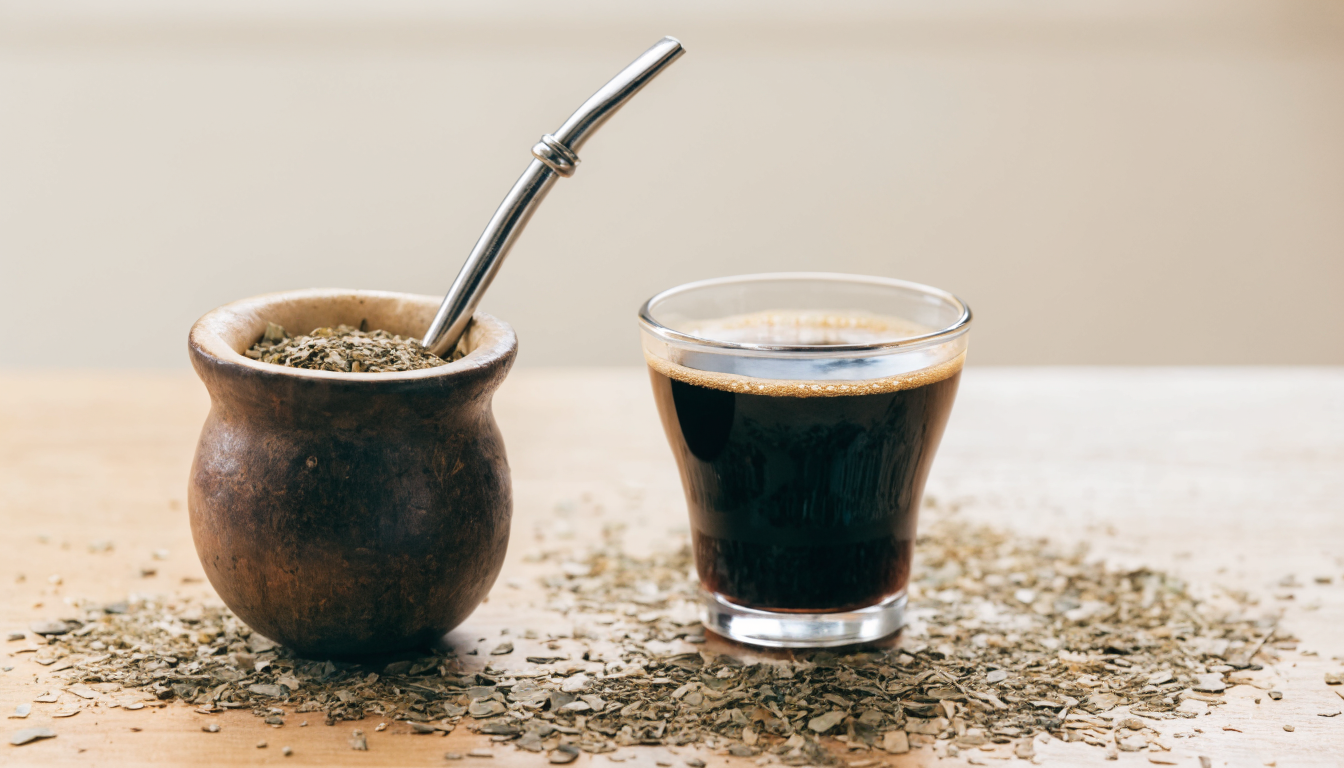
Mate is traditionally prepared in a gourd and drunk through a bombilla, a metal filtering straw. In Argentina, Uruguay, and Paraguay, this beverage is shared with family or friends, a little like coffee is shared on a café terrace here. This social ritual partly explains why mate has long had a reputation as a convivial and soothing beverage, rather than simply a morning pick-me-up.
Today, mate has spread well beyond its countries of origin. It can be found infused, iced, or incorporated into natural energy drinks that specifically aim to recreate this gentle, gradual energy rather than the classic spike caused by industrial caffeine.
If the afternoon slump is your real problem, we have brought together eight practical solutions in our article on the post-lunch slump.
How to incorporate mate into your routine
As a replacement for afternoon coffee
Many people keep their morning coffee but replace their second or third coffee of the day with mate. The idea is simple: keep the quick wake-up ritual while avoiding the caffeine buildup that can disrupt nighttime sleep.
Before a workout or work session
Thanks to its gradual release, mate works well before a long workout or a work session that requires concentration for several hours. This way, you avoid the drop in energy that often follows coffee consumed too early.
In a ready-to-drink version for added convenience
Preparing traditional mate requires some equipment and patience. For those who want to enjoy its benefits without the full ritual, energy drinks containing mate and superfoods such as Ginkgo Biloba offer a convenient alternative that can be taken anywhere.
In a ready-to-drink version, our energy drink is available in Yerba Mate flavor, with 80 mg of natural caffeine and 13 kcal per 100 ml. Its nutritional values are compared with those of other brands on drinkscore.info.
FAQ: your questions about mate and coffee
Does mate really contain more caffeine than coffee?
No, generally speaking, a cup of coffee contains more caffeine than a serving of mate. The difference lies more in how this caffeine is released in the body: more slowly and steadily for mate.
Is mate really good for concentration?
Yes, its active compounds support alertness and mental clarity over time, making it a popular beverage for long work or study sessions.
Can you drink mate late in the day without affecting sleep?
It is generally better tolerated than coffee thanks to its gradual release, but people sensitive to caffeine should still avoid consuming it too late in the evening.
Does mate have any side effects to be aware of?
Consumed in reasonable amounts, mate is well tolerated by most people. Like any beverage containing caffeine, excessive consumption can cause nervousness or digestive issues.
What is the difference in taste between mate and coffee?
Coffee offers roasted and slightly bitter aromas, while mate has a more vegetal, herbal taste, sometimes smoky depending on how it is prepared. Two very different profiles to discover according to your preferences.