You're looking at the organic energy drink aisle and hesitating between matcha and guarana. Both are popular, and both promise energy without the drawbacks of classic coffee, but they don't work the same way at all. We'll explain what really sets them apart so you can choose the one that suits your daily rhythm.
Matcha, the gentle and concentrated energy of green tea
What exactly is matcha
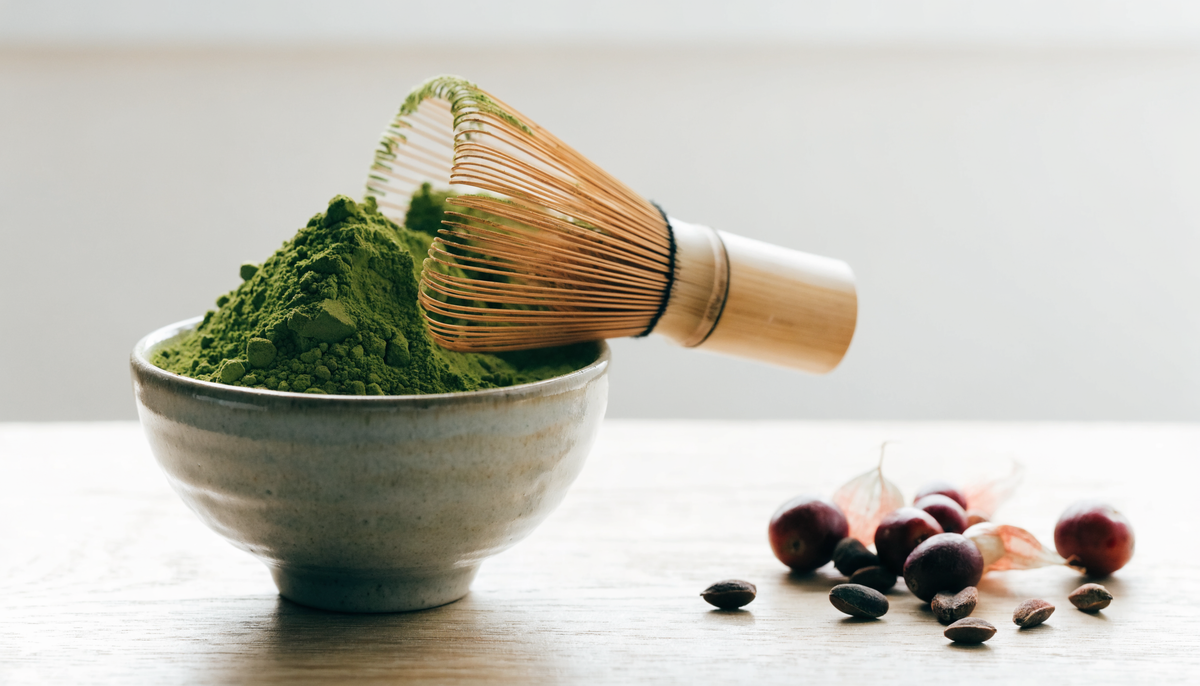
Matcha is a Japanese green tea powder made by grinding shade-grown leaves. This growing method concentrates chlorophyll and certain antioxidants, giving matcha its intense green color and distinctive nutritional profile. Unlike classic green tea, which is infused and then removed, the entire leaf is consumed here in powdered form, which explains its higher caffeine content compared with ordinary green tea.
How matcha's caffeine works thanks to theanine
What makes matcha special is the presence of theanine, an amino acid naturally found in tea. Theanine modulates the effect of caffeine and promotes a state of calm alertness, without the nervousness that a strong coffee can cause. That's why many people describe matcha's energy as gentler and more consistent, with concentration holding steady over time.
Guarana, on the other hand, works in a completely different way. We dedicated an entire article to it, including its dosages and limitations: guarana, a natural boost.
Guarana, the long-lasting energy concentrate
Where does guarana's energy come from
Guarana is a seed native to the Amazon, particularly rich in natural caffeine. At equal weight, it contains significantly more caffeine than roasted coffee beans. It is one of the superfoods most commonly used in organic energy drinks, especially alongside ginkgo biloba.
Why guarana helps prevent an energy crash
What makes guarana distinctive is that its caffeine is trapped in plant fibers and tannins, which slows its release into the body. As a result, the effect builds more gradually and lasts longer than with isolated caffeine, with less risk of experiencing that sudden drop in energy in the middle of the afternoon. That's exactly the principle behind Buddy cans, which combine guarana and ginkgo biloba for natural energy that lasts.
Matcha vs guarana: the direct comparison
Caffeine content
Guarana is generally more concentrated in caffeine than matcha at an equivalent quantity. A serving of guarana can provide an amount comparable to, or even greater than, an espresso, while a bowl of matcha is closer to the caffeine range of filter coffee.
Speed and duration of the effect
Matcha works fairly quickly thanks to its soluble caffeine, with an effect that remains stable for two to three hours thanks to theanine. Guarana takes a little longer to release, but its effect can last for four to six hours, making it a good ally for a long morning of work or a workout planned for later.
Taste and ease of use
Matcha has a vegetal, slightly bitter taste that often takes some getting used to, and its traditional whisked preparation takes time. Guarana, on the other hand, is readily available as a powder, in capsules, or already incorporated into a ready-to-drink beverage, making it more convenient for everyday use if you don't want to prepare a matcha ritual every morning.
If you're more interested in the origin of the caffeine than in the plant itself, our article on natural and synthetic caffeine separates facts from common misconceptions.
Which one to choose based on your needs
For concentration at work
If you're looking for steady energy to get through a busy morning without feeling nervous, matcha is an excellent choice, especially if you're sensitive to overly stimulating drinks. It's well suited to people who want to stay focused on a specific task without feeling wound up.
For energy before exercise or a clear boost
If you need a real boost, for example before a workout or during a difficult afternoon, guarana is better suited to this need thanks to its caffeine concentration and long-lasting effect. That's also why it's found in most natural energy drinks designed for exercise or intense days.
Guarana can also be compared with yerba mate, in a closer contest than you might think. We covered it in our article on yerba mate versus guarana.
How to easily incorporate them into your routine
The morning matcha ritual
To enjoy matcha without spending ages on it, a teaspoon of powder whisked with a little hot water and then topped up with plant-based milk is more than enough. Many people also add it to a morning smoothie, which masks the bitterness for those discovering the taste. The key is to choose culinary- or ceremonial-grade matcha rather than low-quality matcha, which is often more bitter and lower in theanine.
Guarana in a ready-to-drink can
If you don't want to measure out guarana powder or capsules yourself, a can of organic natural energy drink remains the simplest solution. This is the choice Buddy makes with its 250 ml cans containing 13 kcal per 100 ml, combining guarana and ginkgo biloba in flavors such as Lemon Ginger or Mango Passion, designed to provide a boost without a sugar spike. Convenient to slip into a bag before a busy meeting or a late-day workout.
Our Buddy cans get their 80 mg of caffeine from guarana, combined with ginkgo biloba, for 13 kcal per 100 ml. The caffeine content of energy drinks on the market is compared at drinkscore.info.
FAQ: your questions about matcha and guarana
Does matcha contain more caffeine than guarana?
No, it's the opposite. At equal quantities, guarana is significantly more concentrated in caffeine than matcha. Matcha does, however, contain more caffeine than classic brewed green tea.
Can you combine matcha and guarana on the same day?
That's entirely possible, provided you keep an eye on your total caffeine intake for the day, generally around a maximum of 400 mg for a healthy adult. Many people alternate between matcha in the morning and a guarana-based drink in the early afternoon.
Is matcha suitable in the evening?
Like any source of caffeine, matcha is not recommended late in the day if you're sensitive to its effect on sleep. It's better reserved for the morning or early afternoon.
What effects should you watch for with guarana?
Like any concentrated source of caffeine, guarana can cause palpitations or sleep disturbances if consumed excessively. It is not recommended for pregnant women or people sensitive to caffeine, and it's best to follow the dosage indicated on the packaging.
Matcha or guarana, which is better for exercise?
For physical effort, guarana has a slight advantage thanks to its caffeine concentration and prolonged effect, which is particularly useful for long or intense sessions.
In summary
Matcha and guarana aren't meant to compete; they simply meet different needs. Matcha is suited to calm, steady energy, ideal for concentration. Guarana is made for a real boost that lasts. It's up to you to choose based on your day, or try both to find your own balance.